Start with a role and a world
A strong fantasy portrait communicates what the character does and where she belongs. Decide whether your fictional adult character is a navigator, scholar, guardian, or artisan. Then choose a world with a clear visual rule: a floating observatory, a coastal kingdom, or an overgrown archive. One role and one setting create a more coherent image than a list of unrelated fantasy objects.
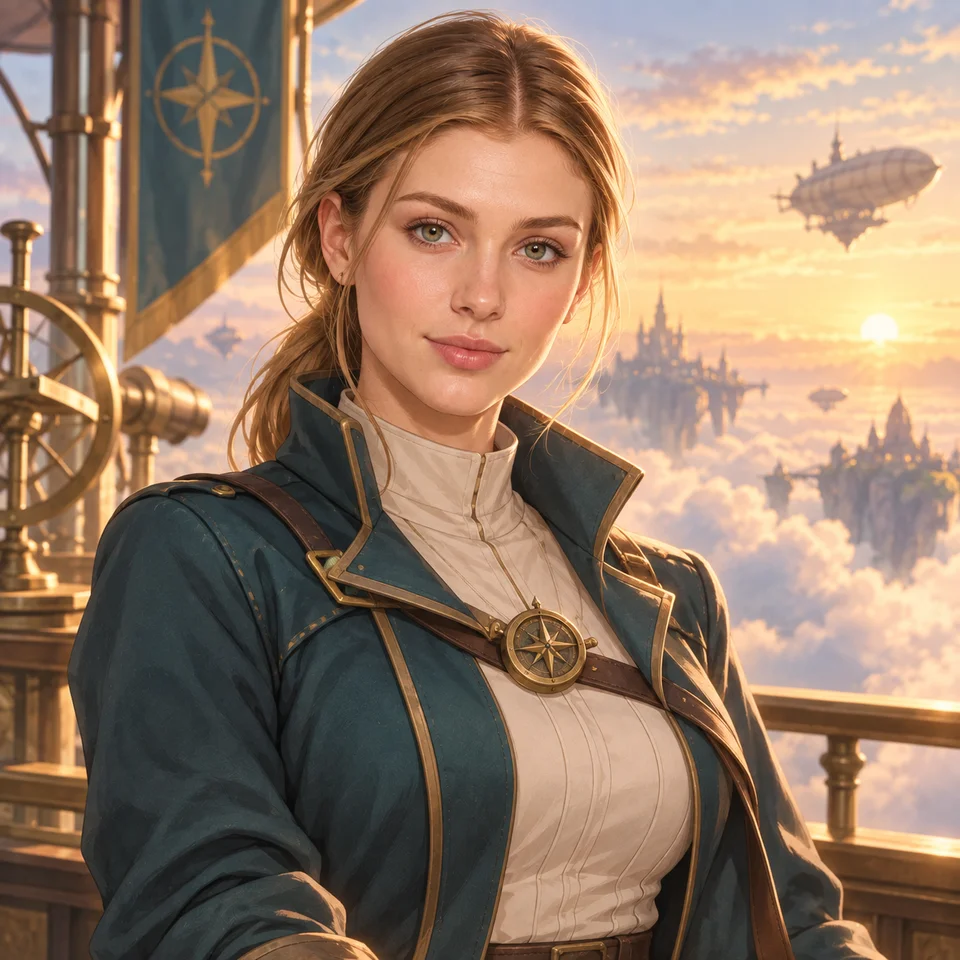
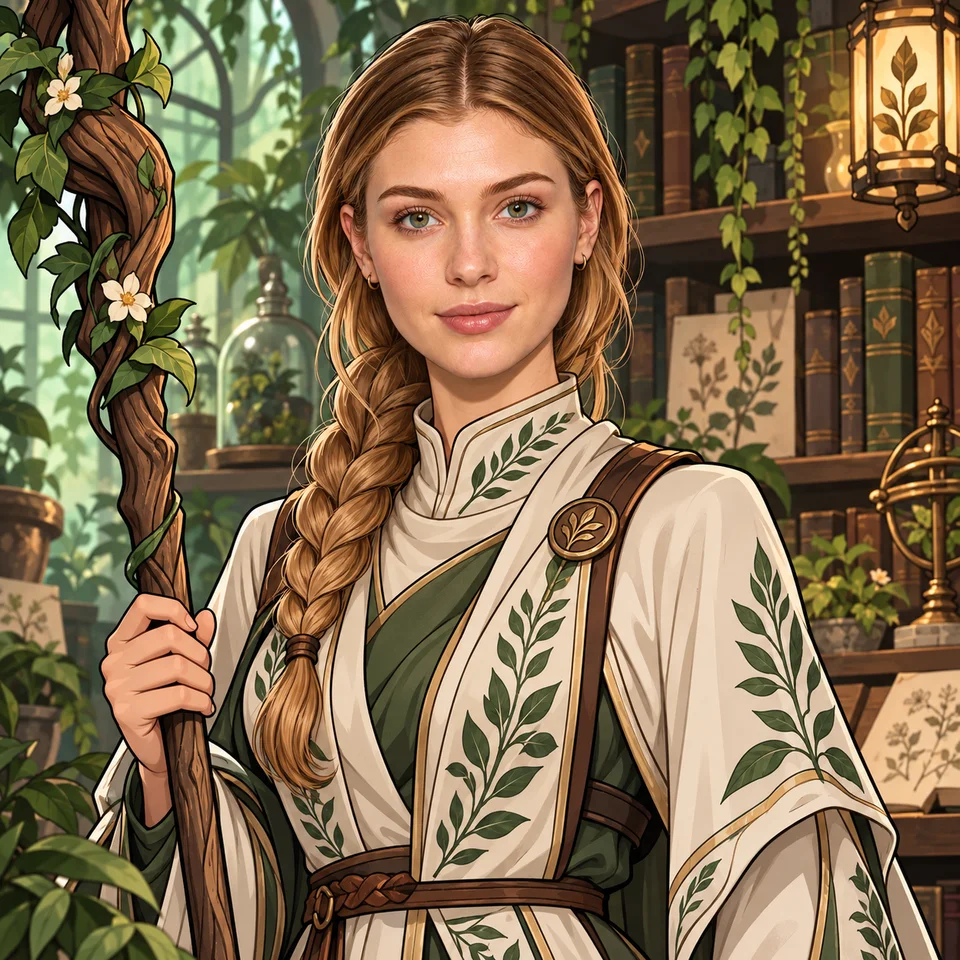
Describe the subject as an adult and use original designs. A distinctive silhouette, a small set of colors, and one signature object can make the concept readable without relying on an existing franchise character. The illustrations above explore the navigator and guardian concepts. The prompts below are shorter starting points to adapt in Dreamgens.
Make costume details serve the story
Give clothing a material, purpose, and color. A weathered teal cloak, brass compass, and practical boots communicate exploration. A layered ceremonial robe and embroidered star chart communicate scholarship. Keep accessories limited enough that you can inspect whether the model placed them correctly.
Lighting should reinforce the world: warm lantern light for a library, cool moonlight for a tower, or diffuse daylight for a forest. Avoid combining contradictory lighting directions unless the scene calls for multiple visible sources.
Choose a style before iterating
Anime, toon, and realistic styles interpret the same fantasy brief differently. Choose an available Dreamgens style first, then refine subject and composition within that look. Use portrait framing for the face and costume; use a wider scene when the environment carries the story.
Change one group of details at a time. If the costume works but the scene is cluttered, simplify the background. If you want to revisit the character later, keep a written visual brief and consider Character Reference. Reference guidance can help with continuity, but it does not guarantee an exact copy.